Securitize (NYSE: SECZ) began trading on July 2, 2026 following its SPAC merger with Cantor Equity Partners II, and on the same day launched an issuer-sponsored tokenized version of its common stock on Avalanche and Solana. The deal generated roughly $400 million in gross proceeds, with fewer than 30% of the SPAC's shareholders opting to redeem, a signal of retained investor conviction going into listing day. Shares popped as much as 10% in the first trading session, and Securitize expects the tokenized tranche, valued at roughly $266-295 million depending on the reporting source, to become the largest tokenized stock in the world at launch.
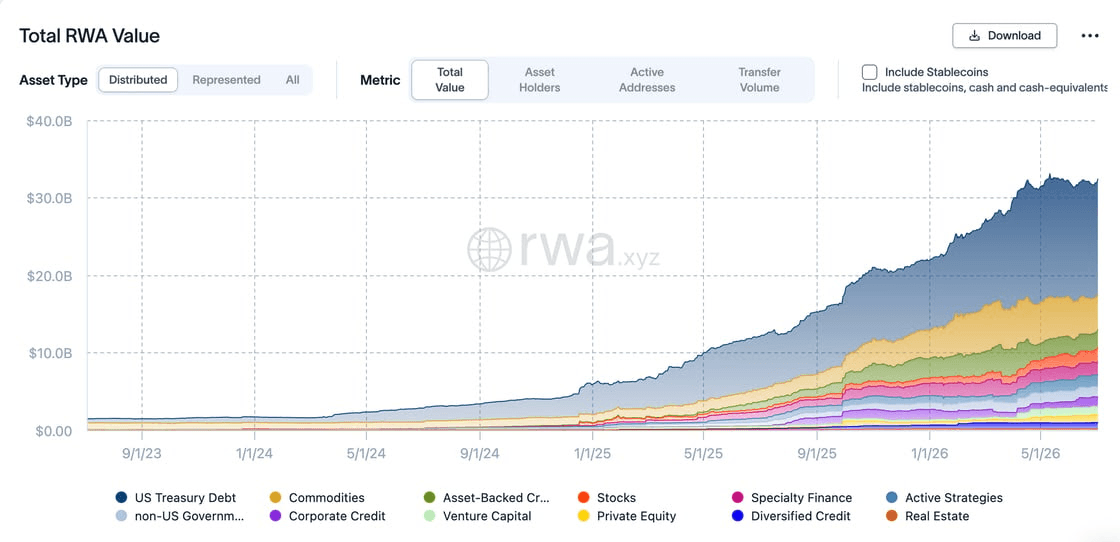
Source: RWA.xyz
Why This Launch Is Structurally Different
The distinction that Securitize and CEO Carlos Domingo have repeatedly emphasized is that SECZ is issuer-sponsored, not a third-party wrapper. That's a meaningful technical and legal difference from most of the tokenized-equity products retail crypto users already interact with:
Rebasing (third-party) model: used by xStocks (Backed Finance/Kraken) and Robinhood's EU tokenized stocks. An independent issuer buys and custodies the real shares, then mints a token that tracks the price. Holders get economic exposure but no shareholder rights, since there's no direct relationship with the underlying company.
Rebasing (direct/issuer) model: used by Securitize and Superstate's Opening Bell. The company itself, or its SEC-registered transfer agent, issues the token as the legal security. Holders in this model have actual shareholder rights, not just synthetic price exposure.
Securitize is one of the few platforms that can operate the direct model at scale: it holds SEC-registered broker-dealer, transfer agent, and alternative trading system status in the U.S., and is separately authorized as an Investment Firm under the EU's DLT Pilot Regime. That dual licensing is the regulatory backbone that lets it claim SECZ tokens are "the same common stock trading on the NYSE," not a derivative or offshore proxy.
Access is still gated: eligible U.S. investors must complete onboarding and KYC/AML checks, and the tokens remain subject to the same legal, contractual, and transfer restrictions as the underlying shares. Tokenization here changes the form of ownership, not the underlying securities-law treatment.
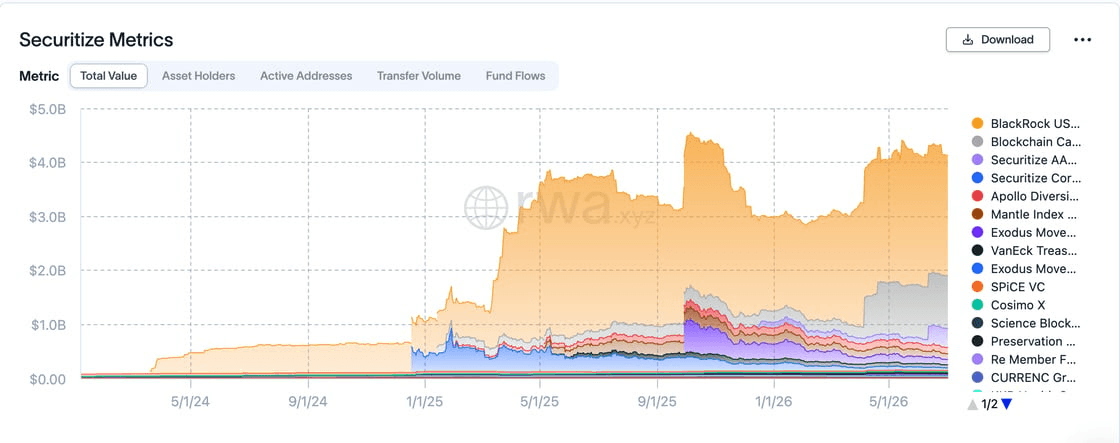
Source: RWA.xyz
Sizing the Tokenized-Equities Market
Securitize's move lands in a sector that has grown quickly but is still small in absolute terms. Some reference points:
Tokenized stocks crossed $1 billion in aggregate market cap with over 185,000 holders by March 2026, up from roughly $20 million and under 1,500 users in December 2024.
xStocks alone accounts for about 25% of total sector value and has processed more than $25 billion in cumulative transaction volume since its mid-2025 launch, concentrated in names like Tesla, Circle, and Nvidia.
Looking further out, Citi has projected the broader tokenized-securities market could reach $5.5 trillion by 2030, while Boston Consulting Group and Ripple put the 2033 figure closer to $18.9 trillion.
Almost all of that historical growth has come from the third-party wrapper model, tokens that replicate price exposure without conferring real ownership. Securitize's bet is that the market shifts toward issuer-sponsored tokens as more public companies and their transfer agents build the compliance rails to support it directly, rather than leaving it to independent crypto-native issuers.
The Competitive and Infrastructure Backdrop
This launch didn't happen in isolation. A few developments over the past several months set the stage:
Intercontinental Exchange (NYSE's parent) partnered with Securitize earlier in 2026 to build infrastructure for tokenized equities, and separately teamed up with transfer agents Computershare and Continental to help other public companies issue shares in token form.
Continental Stock Transfer & Trust selected Securitize as its preferred tokenization provider in late June, extending the issuer-direct model to a much larger base of public and private companies.
Rival third-party issuers have faced their own credibility questions: an RWA.xyz audit found supply discrepancies of roughly 56% across a sample of Robinhood's tokenized stocks, largely from unadjusted NAV erosion on high-yield ETFs and reverse stock splits, a reminder that synthetic wrappers carry operational risk that direct issuance is designed to avoid.
Demand for onchain access to equities is already spilling into DeFi: Ethena Labs has committed $250 million to a Securitize-managed tokenized AAA-rated CLO fund, illustrating how issuer-grade tokenized products are increasingly used as collateral and yield-bearing instruments rather than pure price-tracking tokens.
Together, these threads point to a bifurcating market: crypto-native, third-party wrapped tokens optimized for 24/7 trading and DeFi composability on one side, and issuer-sponsored, compliance-first tokens optimized for legal clarity and institutional adoption on the other. SECZ is the clearest test yet of whether the second model can achieve comparable scale and liquidity.
What to Watch Next
Shareholder participation rate. Securitize's claim to the "largest tokenized stock" title depends on how many of its own shareholders actually opt into the onchain version rather than holding traditional NYSE shares.
Liquidity and secondary trading depth on Avalanche and Solana relative to the NYSE-listed shares, since thin onchain liquidity could produce wider spreads or price divergence versus the primary market.
Follow-on issuers. Domingo has framed SECZ as a "blueprint," and with ICE, Computershare, and Continental now building similar rails, the next few months should reveal whether other newly public or existing listed companies adopt issuer-sponsored tokenization at listing.
Regulatory response, given that U.S. securities regulators are still developing frameworks (including reported sandbox/pilot programs at Nasdaq and NYSE) for how tokenized equities interact with existing exchange and transfer-agent rules.
Key Takeaway: Securitize's Day 1 tokenization of SECZ is less about the $266–295 million currently onchain and more about validating an issuer-direct model that could eventually compete with the third-party wrapped tokens that built the sector's first $1 billion in scale. Whether that model actually attracts liquidity and shareholder participation at scale is still unproven, and tokenized equities, issuer-sponsored or not, carry real regulatory, liquidity, and custody risks alongside the efficiency gains.